View Rights in the Hollywood Hills (Rising Glen Road and the Beverly Highlands Homes Association)

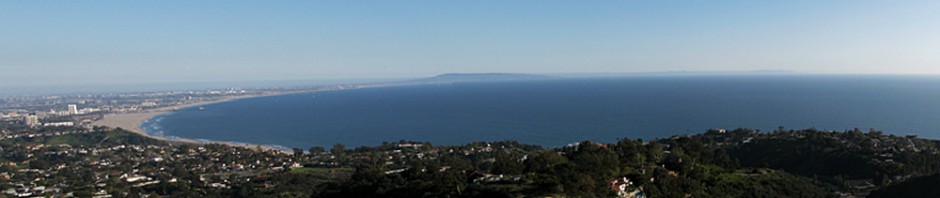
One of the key features of property in the Hollywood Hills are the incredible city and ocean views enjoyed from most of the lots.  However, many property owners learn after closing that their views are not fully protected.  The time to research a property’s view rights is before closing!

Rising Glenn Road in the Hollywood Hills is one of the areas that provides property owners with express view rights.  The Turner Law Firm has successfully handled a number of view rights and neighbor disputes for property owners there.  Many of these matters have involved developers and/or their attorneys who apparently either misread or ignored the CC&Rs.

Rising Glenn Road and portions of the connecting streets north of Sunset Plaza were developed as the “Beverly Highlands Homes Association.”  The 1952 recorded Declarations of Restrictions (a/k/a CC&Rs) provide view rights by expressly limiting the height of homes and structures to 15′ or 16′ depending on the specific lot.

Beverly Highlands CC&Rs

The properties subject to the Beverly Highlands Homes Association CC&Rs include the lots in these recorded maps:  Tract 17290, 19543, 19229 (and possibly three other Tracts that we are researching with the title company.)

The CC&Rs provided that building plans were to be reviewed by the Association, but the Association was suspended as a corporation on April 2, 1972.  A group attempted to revive the Association in 1989, but in 1999, its Board voted to dissolve it.    In response, a separate group of homeowners called “Committee to Save the Beverly Highlands Homes Association” filed a lawsuit against the Board to enjoin the dissolution, Committee to Save the Beverly Highlands Homes Assn. v. Beverly Highlands Homes Assn. (2001) 92 Cal.App.4th 1247.  In a nutshell, the court rejected the Committee’s attempt to save the Association.

The court did state in dicta that even if the Association is dissolved, the property owners still can enforce the CC&Rs: “Article XVI of the Declaration gives the individual Beverly Highlands property owners the right to enforce the Declaration.”  That provision states: “The provisions contained in the Declaration shall bind and inure to the benefit of and be enforceable by Declarant, the Association, or the owner or owners of any portion of said property, or their and each of their legal representatives, heirs, successors and assignees, and failure by Declarant, or by the Association, or by any other property owner, or their legal representatives, heirs, successors or assigns, to enforce any of such conditions, restrictions or charges herein contained shall in no event be deemed as a waiver of the right to do so hereafter.”

California law generally provides that CC&Rs can be directly enforced by individual property owners in the tract, unless the CC&Rs states otherwise.  (See, Civil Code §5975, but that statute applies to CC&Rs for common interest developments that are subject to the Davis Striling Act.   Many developments or tracts, particularly in the Hollywood Hills area and the Santa Monica Mountains, from Hollywood to Pacific Palisades, are not common interest developments, and thus not subject to the Davis Striling Act.  The court in Committee to Save the Beverly Highlands Homes Assn.  held that it was not common interest development:  “Accordingly, we must conclude that the Beverly Highlands has no common area within the meaning of Civil Code section 1351, subdivision (b). Therefore, the Davis-Stirling Act does not apply to it.”  Id., at 1271.  The court has similarly held that the Mount Olympus tract and Cloverdale, Terraza, Stillwater, Weatherford Homeowners Association in Baldwin Hills are not common interest developments.  See, Mount Olympus Property Owners Assn. v. Shpirt (1997)  59 Cal.App.4th 885; Tract 19051 Homeowners Ass’n v. Kemp (2015) 60 Cal.4th 1135.)

If you live on or near Rising Glenn or are considering building there, the property may be subject to specific view rights and building limits that are still enforceable even though the Association was dissloved long ago.   Like most real estate law issues, it best to consult with an experienced attorney before making any major development or land use decisions.

(The Turner Law Firm is one of the leading view rights law firms in California.  It has handled hundreds of view rights cases and many more neighbor and land use disputes.)


Posted in Uncategorized | Tagged , , , | Leave a comment

Anti-SLAPP and HOA Disputes

Colyear v. Rolling Hills Community Association of Rancho Palos Verdes (2017) 9 Cal.App.5th 119 is a recent example of an anti-SLAPP motion being a very powerful defense weapon in HOA litigation.

The term “SLAPP” means “Strategic Lawsuits Against Public Participation,” which includes a lawsuit based on conduct in furtherance of the exercise of free speech regarding an issue of “public interest.”  (Code of Civil Procedure §425.16.)   California law provides that a defendant can seek to immediately strike such a lawsuit and if the defendant’s anti-SLAPP motion is granted, the statute provides that the prevailing defendants is entitled to its attorney’s fees and costs incurred in bringing the motion.  A SLAPP lawsuits are considered to be “generally meritless suits brought primarily to chill the exercise of free speech or petition rights by the threat of severe economic sanctions against the defendant, and not to vindicate a legally cognizable right.”

Colyear and other cases provide chilling examples of how the anti-SLAPP motion procedure has been used to squash homeowners seeking judicial relief from allegedly out of control HOA boards of directors or disputes with other homeowners (members).

Facts

Colyear arises from homeowner defendant Yu Ping Liu’s “Application for Assistance to Restore View” that he with the HOA, because the view from his residence was obstructed by several trees and hedges.   The CC&Rs provided that the HOA had “the right at any time to enter on or upon any part” of a property subject to that declaration “for the purpose of cutting back trees or other plantings which, in the opinion of the [HOA], is warranted to maintain and improve the view of, and protect, adjoining property.”  Liu believed that the trees in question  were on the property immediately north of Liu’s property, which was owned by Richard and Kathleen Krauthamer.  However, plaintiff Richard Colyear alleged that the trees were in fact on his property, which was directly east of the Krauthamer’s property, and kitty-corner to Liu’s property.  Liu, Colyear, and the Krauthamers are all members of the HOA.

Two months after the Application was filed, Colyear filed a lawsuit against Liu and the HOA Board.  Colyear alleged that two of the offending trees were actually on his property, that the relevant tree-trimming CC&R provision covenant did not encumber his property, and therefore that Liu and the HOA were wrongfully clouding his title.

One month after being sued, Liu withdrew his Application.  As a result, the HOA never issued any decision on the Application. Following the withdrawal, the HOA had no pending applications involving either Liu or Colyear’s property.

Colyear’s operative verified complaint “for Declaratory Relief, Injunctive Relief, To Quiet Title, and for Damages” sought a declaration, among other things, that Colyear’s lot was not subject to the tree-trimming CC&R provision; and that a specific HOA Board’s Resolution was void to the extent it purported to enforce such tree-trimming covenant.   The complaint sought to quiet title to Colyear’s lot that it was not covered by the trees tree-trimming CC&R provision.  Finally, the complaint sought injunctive relief barring defendants from seeking to enforce the relevant covenant against Colyear’s lot.  The plaintiff also claimed compensatory and punitive damages from the HOA and the board for alleged fraud and breaches of fiduciary duties.

Liu filed an anti-SLAPP motion to strike Colyear’s complaint, which the trial court granted and court of appeal affirmed.

Decision

The main issue in the report court of appeal decision was whether Colyear’s claim arose from “protected activity.”  The anti-SLAPP motion procedure applies to a lawsuit based on a statement made in connection with “an issue of public interest.”  (Code of Civil Procedure §425.16(e)(4).)

California caselaw holds that “‘public interest’ within the meaning of the anti-SLAPP statute has been broadly defined to include, in addition to government matters,  ‘“private conduct that impacts a broad segment of society and/or that affects a community in a manner similar to that of a governmental entity.” ’ Thus, “several courts have found protected conduct in the context of disputes within a homeowners association.”  Colyear, suppra, at 131; see e.g., Ruiz v. Harbor View Community Assn. (2005) 134 Cal.App.4th 1456, 1468, Country Side Villas Homeowners Assn. v. Ivie (2011) 193 Cal.App.4th 1110, 1113; Damon v. Ocean Hills Journalism Club (2000) 85 Cal.App.4th 468, 479; Lee v. Silveira (2016) 6 Cal.App.5th 527, 540; Talega Maintenance Corporation v. Standard Pacific Corporation (2014) 225 Cal.App.4th 722, 729.

The court rejected Colyear argument that Liu’s application was just a private tree-trimming dispute between two neighbors and therefore does not qualify as a matter of “public interest.”  The court rejected that the argument because Liu’ application evidenced that there was an ongoing controversy, dispute, or discussion regarding the applicability of tree-trimming C&R provision and the HOA’s authority to enforce it.  Furthermore, the issue was an ongoing topic of debate between the board and homeowners, resulting in multiple hearings, letters, and several changes to the board’s policy on the matter starting as early as 2002 and continuing up to the current dispute. In this context, Liu’s application sought to invoke the HOA process at the center of that dispute.

(The reported decision further discussed: Claim Arises From Protected Activity; and Colyear Cannot Demonstrate a Probability of Prevailing Against Liu.)


On the one hand, the case seems to be chilling use of the anti-SLAPP procedure to preclude the right to resolve a CC&R/HOA related disputed by litigation.   We can appreciate plaintiff Colyear’s desire to obtain judicial relief for the ongoing dispute regarding the CC&R’s tree trimming provision and the HOA’s right or power to enforce it.    But obviously the case would have had a different outcome if Colyear would have pursued the HOA’s “dispute resolution process.”   California’s HOA laws (the Davis-Stirling Act) contain several sections that sometimes require the use of the dispute resolution process before litigation can be filed.  Civil Code section 5905 requires that associations provide a “fair, reasonable, and expeditious procedure for resolving a dispute” with members.

Posted in Uncategorized | Tagged , , , , , , , , | Leave a comment

HOA Board of Directors have a duty to act with reasonable diligence in the performance of director duties.

By Keith Turner and Justin Escano


Palm Spings Villas II v. Parth is a another example of what can happen when an HOA board member “goes rogue” and tests the limits of the so-called “business judgment rule,” which HOA board members sometimes naively believe  immunizes their conduct from personal liability.  The court held that an HOA director can be held personally liable for failing to act with reasonable diligence in the performance of director duties.

This case is important reminder that HOA board members’ authority is also limited by the governing documents, the CC&Rs and by-laws.

In this case, the HOA itself sued Erna Parth, the HOA president and a member of the board of directors, for a number of questionable actions she took on behalf of the HOA:

Parth hired a roofing company to perform roofing repairs, without notice or approval by the Board, after the Board had already approved and hired a different roofing company for the same repairs.  She did not confirm whether the company held a roofing license.

Parth signed three promissory notes totaling $1.775 million, secured by HOA assets and property, for a project to repave walkways and other repairs. She did not give notice or obtain approval by the board for obtaining the loans; and she did not review the CC&Rs or Bylaws to determine whether she had authority to execute the promissory notes; but she believed she had the authority to do so. Under the governing documents, a vote of the majority of the members was required to use HOA assets as security for the loans; however, she did not know such a vote was required

Parth hired landscaping  company to a 5-year contract; however, under the Bylaws, a majority vote of the members was required to enter into a services contract for longer than a year. She also hired a new management company, even though the existing company had not yet been terminated by the Board, and the Board agreed not to terminate the company until they received bids from other management companies.

Finally, Parth secretly renewed a 1-year contract with their existing security company, even though the Board was actively obtaining bids from other security companies. She did not disclose the 1-year renewal with the new company. When the HOA Board hired a different security company, the existing company sued for breach of contract, which led to the HOA’s cross-complaint against Parth.

At deposition, Perth repeatedly admitted that she had no understanding of what her actual scope of authority was as the HOA President and a board member, and that she never reviewed the governing documents to find out.

Parth’s main defense from personal liability was the  business judgment rule. Although the business judgment rule applies generally to all corporations, the California Corporations Code has special sections for volunteer directors of nonprofit organizations. At issue in Palm Springs Villas II, was the section governing volunteer directors and officers of mutual benefit corporations, Corp. Code § 7231.5.  Under the business judgment rule, an HOA director will not be held personally liable in  the performance of their duties. Even if a director breaks HOA rules, or otherwise makes unsound business decisions, that director will not be personally liable as long as they acted in good faith, in the best interests of the HOA, and based on reasonable inquiry. The business judgment rule is intended to allow board members to make important decisions, including those that may pose some risk to the HOA; without it, directors would be paralyzed by the fear of being held personally liable for acting on behalf of the HOA.

However, the business judgment rule has its limits. It will not protect a director who fails to exercise reasonable diligence, fails to conduct a reasonable investigation, or otherwise acts in bad faith in the performance of director duties.

In Palm Springs Villas II, the court of appeal held that the business judgment rule did not automatically shield Perth from liability, because there were material issues of fact as to whether Perth exercised reasonable diligence and conducted reasonable investigations in the performance of her duties. Parth repeatedly stated at deposition that, before she engaged in these activities, she did not know whether she had the authority to do so. Further, she did not make any efforts to review the governing documents to determine whether her actions needed approval by the Board or by the shareholders. Finally, Parth failed to conduct reasonable investigations and basic inquiries, such as whether the roofing company she hired had a roofing license. According to the court, these failures to investigate amounted to “willful ignorance,” and created an issue of material fact as to whether Parth acted with reasonable diligence. The court even suggested that Parth’s failures could amount to bad faith conduct. As explained by the court, “Permitting directors to remain ignorant and to rely on their uninformed beliefs to obtain summary judgment would gut the reasonable diligence element of the rule and, quite possibly, incentivize directors to remain ignorant.”

Palm Springs Villas II is a good reminder to HOA directors that they have a duty to act exercise diligence when attending to the property’s needs. HOA directors cannot simply hide behind the business judgment rule. The case is good example for disgruntled unit owners to challenge the ineptitude and incompetence of HOA directors, and to remind them to do their duty.

Posted in Court Cases, HOAs, Local Laws & Ordinances | Tagged , , | Leave a comment

Homeowners of Encino – Zoning Primer

The Homeowners of Encino’s website features an detailed introduction to zoning and planning in Los Angeles: A BRIEF PRIMER ON LAND-USE TERMINOLOGY . Thanks to Gerald A. Silver for letting us link to his excellent article.

Posted in Local Laws & Ordinances | Tagged , , , | Leave a comment

Recent Developments in Neighbor vs. Neighbor Encroachment Related Disputes

By: Keith J. Turner and Angelica J. Varela

Sometimes the development and use of property goes beyond the property line, such as driveways and landscaping improvements, which are called “encroachments.”   (An “encroachment” is the extension of a building or other structure beyond the boundaries of the land on which it was rightfully constructed onto adjoining land, or into its airspace, without the permission or consent of the adjoining landowner.)   Encroachments are often discovered when a land survey is done by a property owner when submitting a new property improvement, such as when a property owner wants to add a swimming pool or home addition.  The law provides that such use and development can sometimes ripen into property rights; and, sometimes it does not.  Some recent cases highlight that the analysis can be complex and it is important for property owners to timely assert their rights, or they risk essentially losing a piece of the land.

  • Equitable easement doctrine: you may be stuck with an encroachment. California courts have discretionary authority to deny a landowner’s request to force removal of a neighbor’s encroachment and instead force the landowner to accept damages as compensation for the judicial creation of an easement over the trespassed-upon property if three elements are proven: (1) the trespass was “ ‘innocent’ ” rather than “ ‘willful or negligent,’ ” (2) the public or the property owner will not be “ ‘ “irreparabl[y] injur[ed]” ’ ” by the easement, and (3) the hardship to the trespasser from having to cease the trespass is “ ‘ “greatly disproportionate to the hardship caused [the owner] by the continuance of the encroachment.”

In Shoen v. Zacarias (2015) 237 Cal.App.4th 16, the dispute was over 481 square foot flat patch of land between two hillside properties.   When the defendant purchased her property in 2003, she thought the patch was on her property and populated it with outdoor furniture—a cabana, a chaise chair, tables, and stools; none of it is set in concrete.  But in 2005, the plaintiff’s predecessor land surveyed the boundaries and discovered that the patch belonged to him, but told the defendant she could continue to use it for as long as he owned the property.   However, in 2006, the plaintiff purchased the property and in 2011, she demanded demand that the defendant remove the furniture, even though the plaintiff could not reach the flat patch of land without a building a staircase that would cost $100,000 to build.

The trial court granted the defendant an equitable easement but the court of appeal reversed, holding that a trial court has the power to issue an equitable easement authorizing a trespasser to continue her trespass in exchange for paying damages, but only if, among other things, the hardship on the trespasser in ceasing the trespass is “greatly disproportionate” to the hardship on the land’s owner in losing use of the trespassed upon portion of her land.  Because removing the furniture would only cost $275, the court held that the defendant was not entitled to an equitable easement because hardship was not “greatly disproportionate” on the defendant.

Shoen is important because the court rejected the lesser criteria of “balancing of conveniences” or “relative hardships” as the basis to determine equitable easement rights.  Rather, the court held that the encroacher to prove that ordering removing of the encroachment would be “greatly disproportionate to the hardship caused [the owner] by the continuance of the encroachment.”

  • Parole License: verbal encroachment agreements may be enforceable

An “easement” is generally defined as the right to use someone else’s property for a specific purposes, such as access, and an easement is considered to be interest in real estate, giving the holder a right to bring a suit for trespass or ejectment. Because it is an interest in the property itself, it is subject to the statute of frauds, so it must be granted in writing.   In contrast a “license” allows its holder to perform some act on property of another, or use the property in some way. It gives the holder a personal privilege, but not an interest in the land itself.  Licenses are usually revocable.

In Richardson v. Franc (2015) 233 Cal.App.4th 744,  the dispute was whether a neighbor exceeded the scope of an express easement for access and utility purposes over a shared driveway, buy installing and maintaining landscaping, irrigation, and lighting.  The trial court ruled—irrespective of the terms of the easement—it would be inequitable to deny respondents an irrevocable license given their substantial investment of time and money on the landscaping and other improvements and the burdened property owner’s years of acquiescence.

Richardson is a major case because licenses are usually revocable, but the court held it was irrevocable and it held that it ran not only in favor of the present owners, but also to their successor-in-interest.   Hence, the court granted essentially a permanent right that runs with the land, the way an easement does.

This case also makes the analysis more difficult and harder to predict outcomes in these neighbor vs. neighbor encroachment related disputes.  The court in  Richardson discussed in great detail all of the landscaping and other improvements that were made over the years and how the burdened property benefitted from letting the easement holder do all the work and pay for all the decades of landscaping and water bills.  So having good evidence such as photos and receipts to build a case fairness and balancing the equities can be the key fact.


Posted in Court Cases, Local Laws & Ordinances, Neighbor v. Neighbor, PVRC News | Tagged , , , , , , | Leave a comment

Prevailing Defendant is Entitled to Attorney’s Fees – California Supreme Court Opinion in Tract 19051 v. Kemp (Yeldell)

In a unanimous decision by all seven Justices, the California Supreme Court held that in any action to enforce governing documents of a common interest development, the “prevailing party” is entitled to attorneys fees under Civil Code section 5975, even where plaintiffs fail to establish that a common interest development exists.  Continue reading

Posted in Court Cases, HOAs, PVRC News, Uncategorized | Tagged , , | Leave a comment

CEQA and View Rights

By Keith Turner and Justin Escano

Another possible weapon for arsenal for view rights claims is the California Environmental Quality Act (CEQA).  In a nutshell,  the CEQA law provides that if a public and private development project may create a significant environmental impact, then an Environmental Impact Report (EIR) must be prepared, analyzing the potential impacts and possible mitigation alternatives.

Continue reading

Posted in Local Laws & Ordinances | Tagged | Leave a comment

Palisades News – Pacific View Rights Center

The Pacific View Rights Center ad in Palisades News, the exiting new town paper.

pvrc

Posted in PVRC News | Tagged | Leave a comment

Pacific Palisades Civic League – Tract 9300 website

The Pacific Palisades Civic League, the claimed guardian of Tract 9300, finally launched its own website:  www.PPCL9300.org

Posted in Local Laws & Ordinances | Tagged , , | Leave a comment

Home Improvement and Resolving Contract Disputes: An Interview with Keith Turner of Turner Law Firm


See Keith Turner’s interview on Southern California Homes, a top site for California homes for sale, as well as New Mexico real estate, Northern California real estate and Los Angeles, CA homes for saleHome Improvement and Resolving Contract Disputes.

Posted in PVRC News | Tagged , , , , , , , , , , | Leave a comment